


Why employee wellbeing, engagement and human connection should be central to business success in the year ahead.
Every organisation will enter 2027 with a plan.
Targets to achieve. Customers to serve. Opportunities to pursue. Challenges to overcome.
But there’s one question that deserves a place alongside every commercial objective:
Are we doing enough to help the people responsible for delivering our business plans perform at their best?
Because businesses don’t achieve results on their own. People do.
They bring the ideas, energy, creativity, relationships and commitment that turn business objectives into reality.
And their health and wellbeing influence their ability to do so, consistently and sustainably.
As we look towards 2027, it’s time to stop treating employee wellbeing as something separate from business performance.
The two are fundamentally connected.
As businesses prepare for the year ahead, employee wellbeing in 2027 should be a strategic priority – supporting the health, engagement and human connections that underpin sustained performance.
1. People Are at the Heart of Business Performance
When organisations talk about improving performance, the conversation often focuses on technology, processes, efficiency and financial investment.
All are important. But even the most sophisticated business strategy depends on the people delivering it.
Employees need the energy to perform, the confidence to contribute, the motivation to engage and the support to navigate challenges.
When those foundations are weakened by stress, poor health, exhaustion or disconnection, the consequences can extend beyond individual wellbeing.
They can affect collaboration, attendance, creativity, customer experiences and organisational performance.
The evidence is increasingly difficult to overlook.
According to the CIPD’s 2025 Health and Wellbeing at Work research, average sickness absence in the UK reached 9.4 days per employee, compared with 5.8 days reported in 2020.
That’s an increase of approximately 62%.
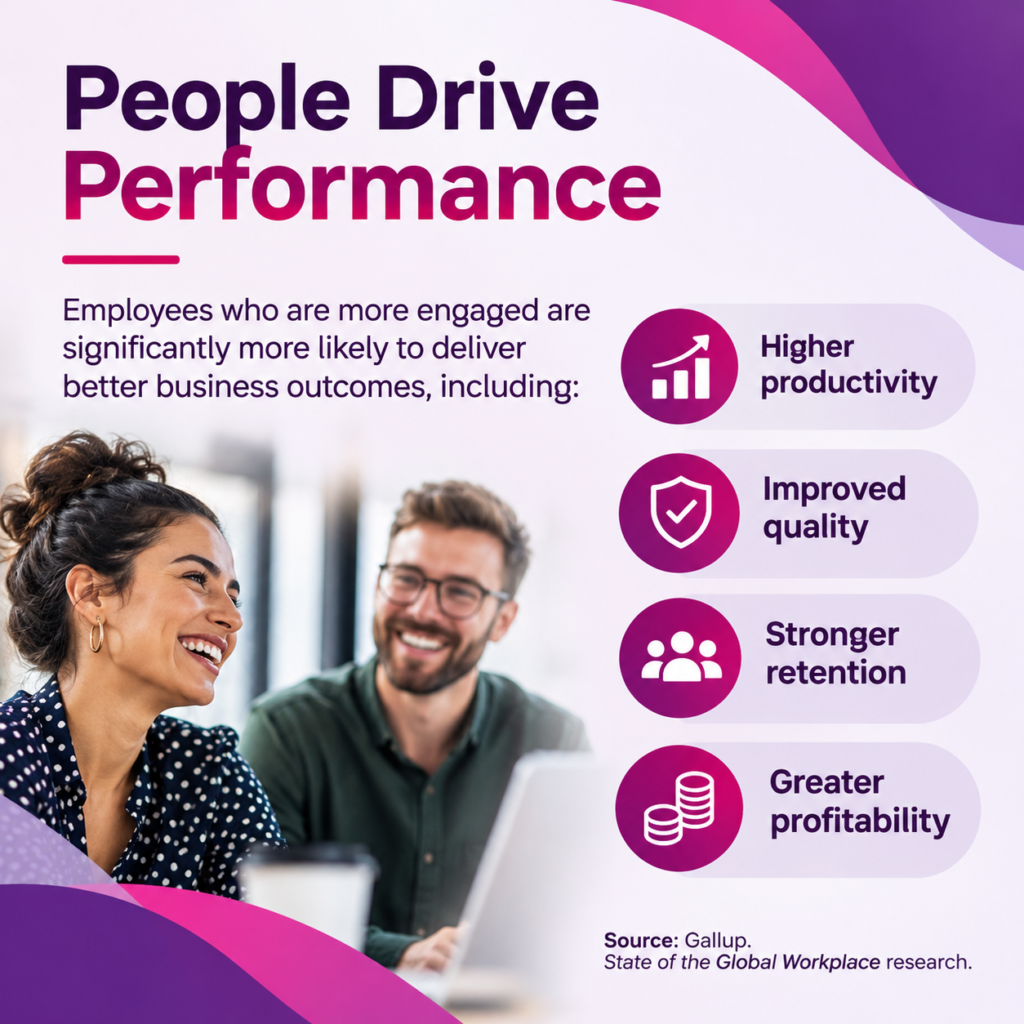
Meanwhile, Gallup’s research consistently identifies a relationship between employee engagement and important business outcomes, including productivity, profitability, retention and absenteeism.
These findings don’t suggest that wellbeing initiatives alone can solve every organisational challenge.
They do, however, reinforce an important principle:
Supporting the people behind business performance isn’t a distraction from commercial success. It’s part of creating the conditions for it.
2. Employee Wellbeing Is More Than the Absence of Illness
For many organisations, wellbeing strategies have traditionally focused on helping employees when something goes wrong.
Employee Assistance Programmes, occupational health services, mental health support and absence management all play valuable roles.
But supporting people through difficulties is only one part of a comprehensive wellbeing strategy.
What about helping employees feel healthier, more energised, connected and fulfilled in their everyday lives?
What about encouraging positive habits before problems emerge?
Physical activity, mindfulness, creativity, social interaction, volunteering and time spent pursuing personal interests can all contribute to different aspects of wellbeing.
And importantly, wellbeing isn’t one-size-fits-all.
For one employee, a lunchtime walk might provide a welcome opportunity to recharge. For another, connecting with colleagues, practising mindfulness or exploring a creative interest may be more meaningful.
The opportunity for employers is to create an environment where positive wellbeing habits feel accessible, enjoyable and achievable.
Not another obligation on an already busy to-do list.
But a positive part of everyday life.
This is why a proactive approach to employee wellbeing deserves a place in 2027 business planning.
3. Human Connection: An Overlooked Driver of Wellbeing and Performance
Business performance depends on more than individual capability.
It depends on people working together.
Sharing ideas. Supporting colleagues. Solving problems. Building trust. Celebrating achievements.
These everyday human interactions help create the relationships and culture that enable teams to function effectively.
Yet human connection can be easy to overlook when organisations focus heavily on individual targets, efficiency and output.
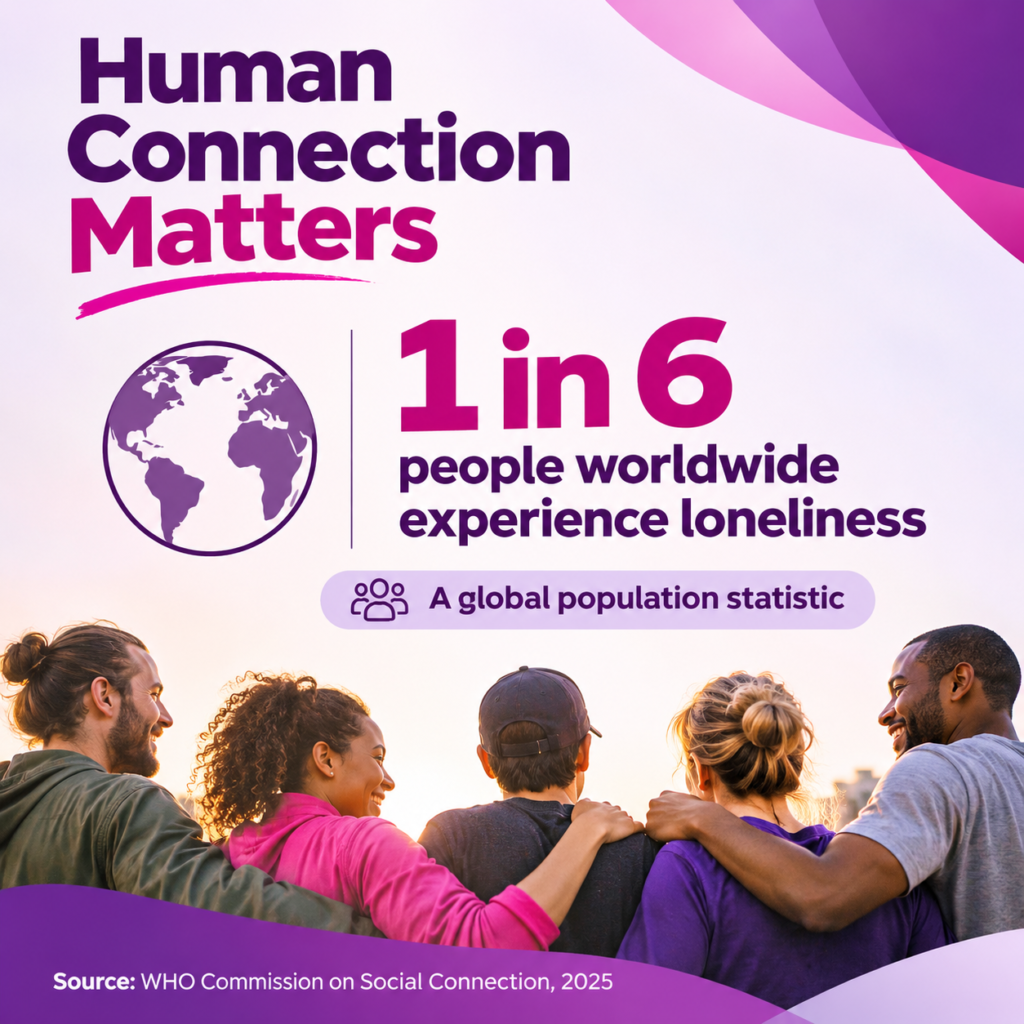
The World Health Organization’s 2025 Commission on Social Connection highlighted the significance of loneliness and social isolation, reporting that approximately one in six people worldwide experiences loneliness.
This is a global population finding, rather than a workplace-specific statistic. Nevertheless, it underlines the importance of social connection to health and wellbeing.
Within organisations, meaningful relationships can contribute to belonging, mutual support, collaboration and engagement.
And those relationships don’t always develop through formal meetings or structured workplace interactions.
Sometimes, the most valuable connections happen when people share an experience outside their usual responsibilities.
A team walking challenge.
A shared wellbeing goal.
A volunteering initiative.
A moment of recognition or encouragement.
An opportunity to discover common interests with colleagues from another department or location.
These experiences can help people see one another as individuals, rather than simply job titles.
As organisations plan for 2027, human connection deserves to be treated as a strategic wellbeing priority – not an optional extra.
Because stronger relationships can help create stronger teams. And stronger teams are an important part of sustained organisational performance.
4. From Wellbeing Initiatives to a Culture of Wellbeing
January often arrives with renewed enthusiasm for health and wellbeing.
New goals are set. Challenges are launched. Employees are encouraged to make positive changes.
But what happens when February arrives?
A successful wellbeing strategy shouldn’t depend on a burst of enthusiasm at the beginning of the year.
Nor should it be defined solely by the number of awareness days, workshops or benefits an organisation offers.
The more meaningful question is whether employees have regular opportunities to participate in activities that support their wellbeing throughout the year.
This requires consistency.
It also requires inclusion.
Not everyone enjoys running. Not everyone wants to compete. And not everyone has the same physical abilities, interests or personal circumstances.
A well-designed wellbeing programme should recognise these differences and provide multiple ways to get involved.
Movement and physical activity might sit alongside mindfulness, creative activities, social connection, volunteering and opportunities to support others.
Friendly challenges, shared milestones, recognition and rewards can also help make participation more enjoyable.
But these activities work best when supported by a healthy workplace culture.
Reasonable workloads, supportive managers, psychological safety, flexibility and opportunities to recover remain fundamental.
Wellbeing isn’t simply something employees do. It’s also something organisations help make possible.
5. Employee Wellbeing in 2027: Building Positive, Sustainable Habits
One of the biggest challenges for any wellbeing programme is turning good intentions into sustained participation.
Most people recognise the value of being more active, managing stress and maintaining positive relationships.
But knowing what is good for us doesn’t always make it easy to put into practice.
Time pressures, competing priorities, motivation and established routines can all get in the way.
This is where small, achievable actions matter.
A short walk during the working day.
A few minutes of mindfulness.
A creative activity.
A positive interaction with a colleague.
Taking part in a shared team challenge.
Individually, these actions may seem modest. Repeated consistently, they can help people build healthier routines and create opportunities for connection.
Employers can support this process by making participation simple, recognising progress and offering experiences that people genuinely want to engage with.
Gamification can play a useful role, too.
Points, milestones, team challenges and rewards can make wellbeing activities more engaging, particularly when designed to encourage participation rather than create pressure or unhealthy competition.
At GoVida, this philosophy sits at the heart of our approach: making wellbeing positive, inclusive, social and rewarding.
By encouraging a broad range of everyday activities and bringing people together through shared experiences, organisations can help employees develop habits that support wellbeing at work and beyond.
6. Five Questions Every Business Leader Should Ask Before 2027
As organisations finalise their plans for the year ahead, wellbeing deserves the same strategic consideration as other business priorities.
Here are five questions worth asking:
1. Is employee wellbeing connected to our wider business objectives?
Are we considering the health, energy and engagement of our people when planning for growth, productivity, customer experience and organisational change?
2. Are we creating opportunities for people to connect?
Do employees have meaningful opportunities to build relationships, collaborate across teams and feel part of a wider community?
3. Does our wellbeing approach reach everyone?
Are activities inclusive of different abilities, interests, working patterns and locations, or do they appeal primarily to a small group of already-engaged employees?
4. Are we encouraging positive habits throughout the year?
Do we have a consistent programme of activities that helps employees participate regularly, rather than relying on occasional events?
5. Do we know whether our approach is making a difference?
Are we listening to employees and evaluating participation, engagement, wellbeing experiences and relevant organisational outcomes?
These questions won’t all have simple answers.
But asking them is an important starting point for making wellbeing a more meaningful part of business strategy.
7. Your People Drive Your Performance. Make Them a Priority in 2027.
The organisations that succeed in 2027 will need more than ambitious targets and efficient processes.
They’ll need people who feel supported, motivated, connected and able to contribute their best.
That doesn’t mean expecting employees to be productive every moment, or treating wellbeing solely as a way to improve commercial results.
People’s health, happiness and quality of life matter in their own right.
But there is no contradiction between caring about employees as people and recognising their contribution to organisational success.
Healthy, engaged and connected people help create the foundations for healthy, resilient and successful organisations.
So as you prepare your business plan for 2027, consider not only what you want your organisation to achieve.
Consider how you’re going to help your people thrive along the way.
Create opportunities for connection.
Encourage positive everyday habits.
Make wellbeing inclusive and enjoyable.
Build momentum that lasts beyond January.
Because your people don’t just contribute to your business performance.
Your people drive it.
Looking Ahead to a Healthier, More Connected 2027
At GoVida, we help organisations inspire positive wellbeing habits through engaging activities, team challenges, recognition and rewards.
Our approach brings physical, mental and social wellbeing together, helping employees feel motivated, supported and connected.
As we approach 2027, we’ll be sharing ideas and inspiration to help organisations build a year of positive wellbeing experiences.
Make 2027 the year you put your people at the heart of your performance strategy.
Related Health & Wellbeing Blogs

Could Your Employees’ Fitness Be Your Competitive Advantage?
Could employee fitness be an overlooked competitive advantage? Explore the science linking exercise with energy, focus and work performance – and how employers can help colleagues become more active.
Read this blog
Is Employee Wellbeing Too Reactive? The Case for a Proactive Approach
Is employee wellbeing too reactive? Discover how a proactive approach can inspire healthier habits, stronger connections and happier, more energised teams. Explore why workplace wellbeing should go beyond preventing illness to helping people thrive, both at work and in life.
Read this blog
Workplace Mental Health: Are We Asking the Right Questions?
Mental health is one of the leading causes of long-term sickness absence, but are employers asking the right questions? We explore the rise in workplace mental health challenges, the difference between awareness and understanding, and how HR professionals can take more meaningful action to support their people.
Read this blog