


We’ve all heard it before: drink more water. It’s one of the most common pieces of health advice out there. And yet, for many of us, hydration is still inconsistent.
That’s because hydration isn’t a knowledge problem – it’s a behaviour-change problem. Like most habits, it only sticks when there’s a clear “what’s in it for me?” and when the actions required are simple, practical, and repeatable.
This guide breaks down:
- why hydration really matters (backed by credible science)
- the tangible benefits you can actually feel
- how hydration links to performance, energy, appearance, and long-term health
- what to drink, when – including the role of salt and electrolytes
- simple habits that make staying hydrated effortless
Why hydration matters more than you think
Water plays a role in almost every system in the body. It helps regulate body temperature, maintain blood volume, transport nutrients, support digestion, lubricate joints, protect organs, and remove waste through the kidneys.
Even mild dehydration – often defined as a loss of around 1–2% of body weight – has been associated with:
- increased fatigue
- headaches
- reduced alertness
- lower mood and higher perceived effort
In other words, you don’t need to be severely dehydrated to feel the effects.
The real benefits of being consistently hydrated
Physical performance
Hydration is one of the simplest performance tools available. When fluid levels drop, the heart has to work harder, body temperature rises more quickly, and exercise feels harder than it should.
Research in sports and exercise science consistently shows that dehydration can impair endurance performance, particularly during longer sessions or in warm conditions. Staying hydrated helps maintain cardiovascular efficiency and reduces heat strain – meaning workouts feel more manageable and recovery is smoother.
What this means for you: better training sessions, fewer “flat” workouts, and more consistent performance.
Cognitive performance, focus, and mood
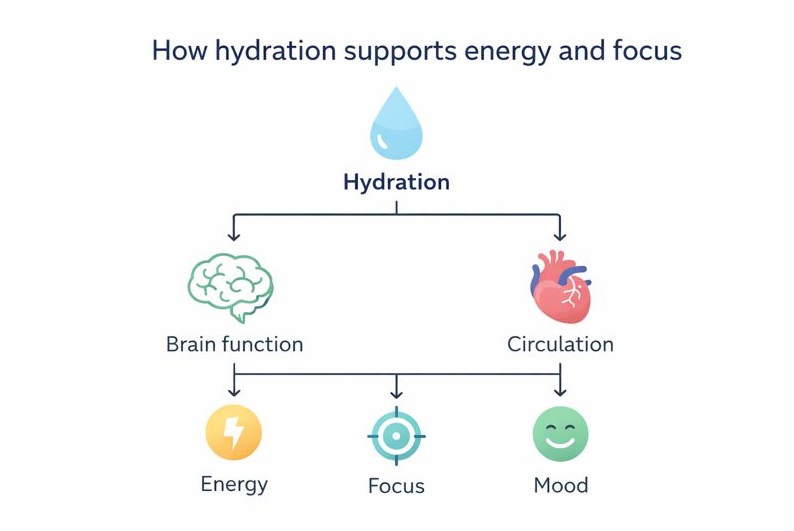
The brain is highly sensitive to changes in hydration. Studies have found that mild dehydration can negatively affect mood, increase feelings of fatigue, and make tasks feel more difficult.
While changes in objective cognitive performance (like memory or reaction time) can be subtle, people consistently report worse concentration, lower alertness, and higher mental effort when under‑hydrated.
What this means for you: clearer thinking, better focus, and fewer afternoon slumps.
Energy levels
One of the most common symptoms of dehydration is low energy. Many people interpret this as stress, poor sleep, or lack of motivation – when in reality, they simply haven’t drunk enough fluids.
Research links dehydration with increased fatigue and reduced alertness, even when people aren’t consciously thirsty.
What this means for you: more stable energy throughout the day, without relying on extra caffeine.
Appearance and skin health
Hydration isn’t a miracle cure for skin, but it does matter – especially if you usually drink very little.
Studies suggest that increasing water intake can improve skin hydration, elasticity, and smoothness in individuals who start off under‑hydrated. While hydration won’t replace good skincare, it supports the skin’s structure from the inside.
What this means for you: healthier‑looking, less dry skin over time.
Health, risk reduction, and longevity
Hydration research is complex, but there are areas where evidence is strong:
- Kidney stones: Higher fluid intake significantly reduces the risk of recurrence.
- Urinary tract infections: In people with low baseline fluid intake, increasing water reduces repeat infections.
- Headaches: Increasing water intake can reduce headache frequency or intensity for some individuals.
- Weight management: Drinking water before meals can support weight loss by increasing fullness and replacing sugary drinks.
The strongest clinical trial evidence supports hydration for kidney health and weight management, with emerging evidence for other long‑term benefits.
How much should you drink?
There’s no single perfect number, but respected health authorities provide useful reference ranges.
- European guidance: ~2.0 litres per day for women, ~2.5 litres for men (from all fluids and food)
- US guidance: ~2.7 litres per day for women, ~3.7 litres for men (from all sources)
Your actual needs depend on body size, activity level, temperature, sweat rate, altitude, and diet.
Two simple hydration checks
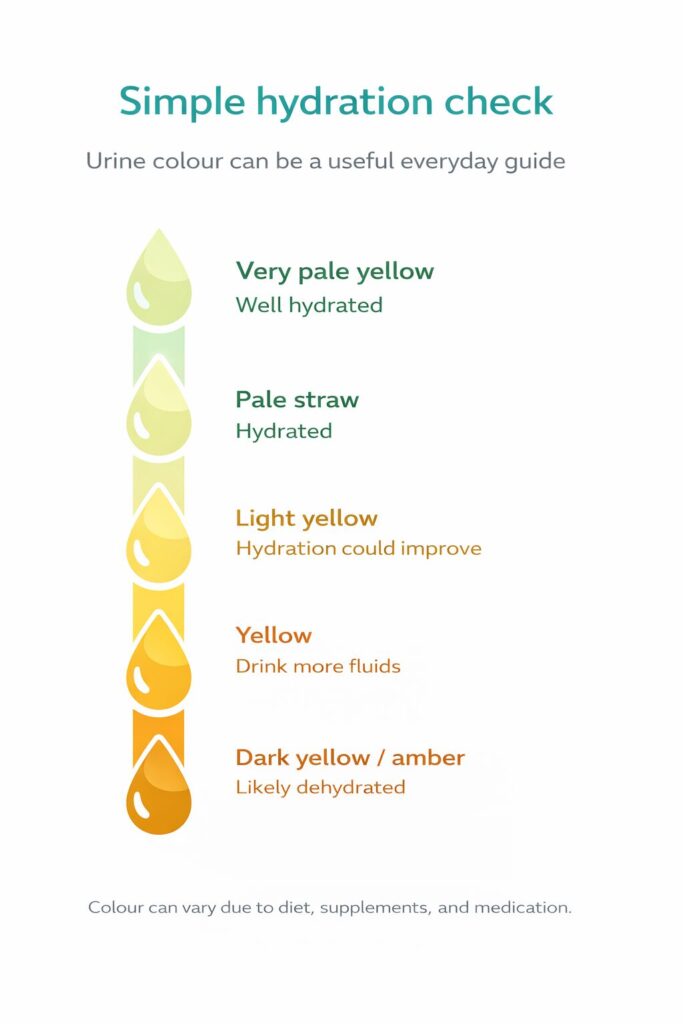
- Urine colour: Pale straw colour usually indicates good hydration.
- Daily pattern: If you only remember to drink in the afternoon, you’re likely playing catch‑up.
What counts as hydration?
Everyday fluid sources
- Water (still or sparkling)
- Tea and coffee (in moderation)
- Milk
- Soups and broths
- Water‑rich foods such as fruit, vegetables, and yogurt
Despite common myths, moderate tea and coffee intake still contributes to daily fluid intake for most people.
Use caution with
- Sugary drinks (extra calories and dental impact)
- Alcohol (can worsen hydration and sleep quality)
- Very high caffeine intakes
Electrolytes and salt: when water isn’t enough
Electrolytes – especially sodium – help the body retain fluids, regulate nerve signals, and support muscle function. You lose sodium through sweat, and some people lose more than others.
When water alone is enough
- Normal daily activity
- Light exercise under 60 minutes
- Cooler conditions with minimal sweating
When electrolytes help
- Longer exercise sessions
- Hot or humid environments
- Heavy or salty sweaters
- Back‑to‑back training days
- Rapid rehydration after significant sweat loss
Including sodium helps the body retain the fluid you drink and reduces the risk of over‑dilution.
What to drink and when
Morning
After several hours without fluids overnight, starting the day with a glass of water helps re‑hydrate the body. Tea or coffee can follow – they still count towards fluid intake.
Before exercise
Aim to start exercise hydrated:
- Drink water with meals in the hours beforehand
- Top up 30–60 minutes before if you tend to feel thirsty early in sessions
During exercise
- Under 60 minutes: Water is usually sufficient
- Longer or harder sessions: Fluids with electrolytes – and carbohydrates if performance matters
After exercise
To fully rehydrate, aim to replace around 125–150% of the fluid lost over the next few hours. Including sodium (from food or drink) helps retain that fluid more effectively.
Making hydration a habit that lasts
Hydration works best when it’s automatic.
1. Anchor it to existing habits
Link drinking to moments that already happen:
- after brushing your teeth
- when you start work
- before lunch
- after meetings
At each moment, take several big sips.
2. Make it easy
- Keep a bottle on your desk or in your bag
- Use a bottle you enjoy using
- Keep water visible
3. Choose your personal benefit
Pick one reason hydration matters to you right now:
- better energy
- improved focus
- stronger workouts
- fewer headaches
Motivation sticks when it’s personal.
The simple hydration checklist
- Start your day with water
- Aim for pale-straw urine most days
- Water plus regular meals covers most needs
- Add electrolytes for long, hot, or sweaty sessions
- Replace more fluids after heavy exercise
- Tea and coffee count (in moderation)
- Avoid extremes – both under- and over-drinking
Key takeaway: Hydration isn’t about perfection. It’s about small, consistent habits that support your energy, focus, performance, and long-term health.
If you have kidney disease, heart conditions, or have been advised to restrict fluids or salt, always follow medical guidance.
Related Health & Wellbeing Blogs

10 Great Tasting Nutritious Recipes
GoVida nutritionist, Nick Wall, has created 10 healthy meals and snacks designed to provide you with the balance of nutrients…
Read this blog
Long-Distance Lorry Driver? You’re Basically an Elite Athlete!
If you drive for a living, you might not think of yourself as comparable to Lewis Hamilton or Max Verstappen – but some of the demands on you, as a long-distance lorry driver, really do overlap with the elite of the racing world.
Read this blog