
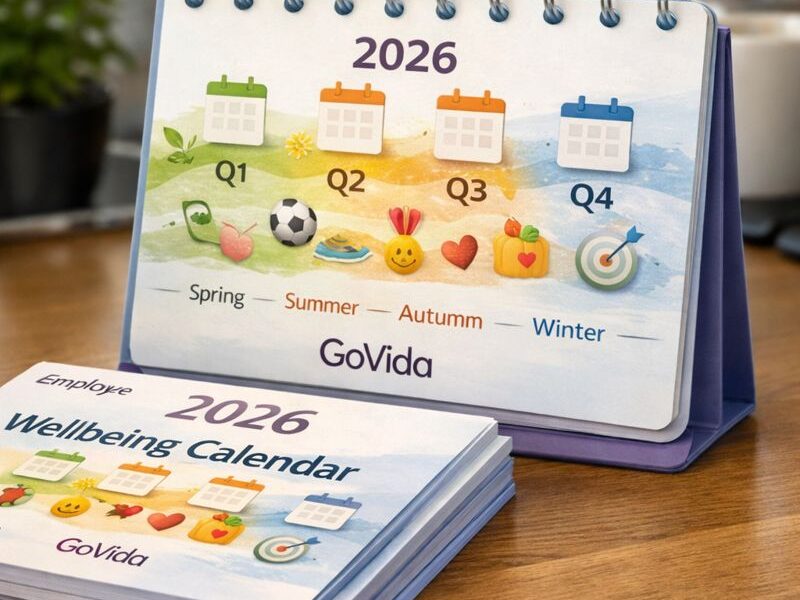

For many organisations, building an employee wellbeing calendar for 2026 starts with good intentions – and ends with last-minute planning, reactive initiatives, and overwhelmed HR teams.
Sound familiar?
The reality is that effective wellbeing doesn’t happen by accident. It’s built through thoughtful planning, variety, and consistency across the year. The challenge? Most HR teams are already stretched, and designing a full 12 months of meaningful wellbeing activity can feel overwhelming.
That’s why forward-thinking organisations are changing how they approach wellbeing planning – and starting earlier than ever.
The problem with ad-hoc wellbeing initiatives
Many companies still approach wellbeing month by month:
- A steps challenge here
- A Mental Health Awareness Week post there
- Something rushed together when engagement dips
While these initiatives may have value individually, they often lack:
- A clear structure
- A sense of progression
- Long-term engagement
The result is fragmented activity that struggles to gain momentum – and HR teams constantly scrambling for the “next idea”.
Why annual wellbeing planning works better
Planning wellbeing across a full year unlocks several powerful benefits:
1. Consistency builds engagement
When employees know wellbeing is an ongoing priority – not a one-off campaign – participation naturally increases.
2. Variety keeps things fresh
A year-long plan allows you to balance:
- Physical wellbeing
- Mental wellbeing
- Social connection
- Seasonal themes
- Awareness moments
This inclusivity ensures wellbeing resonates with more people, more often.
3. Less pressure on HR teams
Instead of reinventing the wheel every month, teams can:
- Plan once
- Execute confidently
- Focus on engagement rather than logistics
The shift we’re seeing in high-performing teams
At GoVida, we work with organisations of all sizes, and one pattern is clear:
The most engaged teams don’t “do wellbeing” — they design it
They plan ahead.
They align initiatives with the rhythm of the year.
They create moments employees look forward to.
And crucially, they give themselves the tools to do it sustainably.
Introducing the Employee Wellbeing Calendar for 2026
To help HR and People teams plan with confidence, we’ve created the GoVida 2026 Wellbeing Calendar – a practical, plug-and-play resource designed to take the pressure out of planning.
The calendar:
- Maps out wellbeing themes across the entire year
- Aligns with key awareness moments and seasonal energy
- Offers ideas that support physical, mental, and social wellbeing
- Helps teams move from reactive initiatives to a joined-up strategy
Whether you’re running monthly challenges, quarterly campaigns, or company-wide wellbeing programmes, the calendar provides a clear structure to build from.
Get your free employee wellbeing calendar for 2026 here.
A smarter way to approach 2026
The question isn’t whether wellbeing matters – that’s already been answered.
The real question is:
How can we deliver meaningful wellbeing without overloading HR teams?
Planning early.
Thinking holistically.
And using tools designed to support you – not add more work.
If 2026 is the year you want wellbeing to feel intentional, engaging, and sustainable, starting with a clear plan makes all the difference.
Employee Wellbeing Calendar FAQs
An employee wellbeing calendar is a structured plan that maps out wellbeing themes, initiatives, and activities across the year. It helps organisations move away from reactive, one-off initiatives and instead deliver consistent, engaging wellbeing support that covers physical, mental, and social wellbeing.
A strong wellbeing calendar should include a mix of activities and themes that support different aspects of wellbeing. This typically includes movement challenges, mental wellbeing initiatives, opportunities for social connection, seasonal themes, and key awareness moments. Variety is essential to ensure wellbeing feels inclusive and relevant to different employees.
Yes. An employee wellbeing calendar can be adapted for organisations of any size. Smaller teams may focus on simpler, low-cost activities, while larger organisations can layer in team challenges and campaigns. The key benefit is having a clear structure that can scale with your organisation.
A wellbeing calendar improves engagement by creating clarity and anticipation. When employees know what’s coming and see wellbeing treated as an ongoing priority, participation increases. A planned calendar also allows organisations to balance activities across the year, helping avoid fatigue while maintaining momentum.
GoVida supports employee wellbeing planning by providing ready-to-use challenges, wellbeing activities, and engagement tools that fit seamlessly into an annual wellbeing calendar. Our approach helps organisations deliver consistent wellbeing experiences without increasing the workload for HR or People teams.
Absolutely. A digital-first employee wellbeing calendar works especially well for hybrid and remote teams, as activities can be completed flexibly and participation isn’t limited by location. This helps organisations create shared wellbeing experiences, even when teams are distributed.
The easiest way to get started is with a pre-built plan. The GoVida 2026 Employee Wellbeing Calendar provides a clear structure, themes, and ideas that organisations can tailor to their people, making it easy to plan a full year of wellbeing with confidence.
Example structure for a 2026 employee wellbeing calendar
| Period | Focus | Example Activities |
|---|---|---|
| Q1 | Energy & movement | Steps challenges, goal setting |
| Q2 | Mental wellbeing | Mindfulness, balance activities |
| Q3 | Connection | Team challenges, social wellbeing |
| Q4 | Reflection | Gratitude, year-end wellbeing |
Related Health & Wellbeing Blogs

Top Tips for GoVida Steps Challenges
Simple tips to help you track your steps, stay motivated, and get the most from your GoVida Steps Challenge.
Read this blog
How to Support Your Employees Through the Current Cost of Living Crisis
In July 2022, 91% of UK households reported an increase in their cost of living – up from 62% in…
Read this blog
How to Celebrate International Day of Friendship with Your BFFs
July 30th marks International Day of Friendship, and while that might sound a tad on the woolly side to some,…
Read this blog